
Selling Guides
Selling a property in Marbella: the practical steps
A clear route from setting the price to handing over the keys in Marbella, Nueva Andalucía, Benahavís, Puerto Banús or Estepona.
1. Agree the price and your plan
Start with the outcome you need: a target sale price, your preferred timing and what remains after mortgage repayment, agency fees, legal costs and possible taxes. Ask for a valuation based on comparable homes in the same micro-area, not just the highest asking prices online.
A frontline golf apartment in Nueva Andalucía, a villa above Benahavís and a home near Estepona's seafront attract different buyers. Price, presentation and marketing should reflect the exact location, condition and view.

2. Gather the paperwork early
Have your deed, a recent Land Registry nota simple, cadastral reference, latest IBI receipt and community fee details ready. Ask the community for its debt certificate and information on agreed works or special assessments. Tell your lawyer about any mortgage, tenant, extension or alteration so issues can be addressed before a buyer is waiting.
Arrange a valid energy performance certificate and rating for advertising where required. Your lawyer or technical adviser can identify any other property-specific documents, including planning or occupation records. Do not describe an unverified extension or rental permission as approved.
3. Present the home honestly
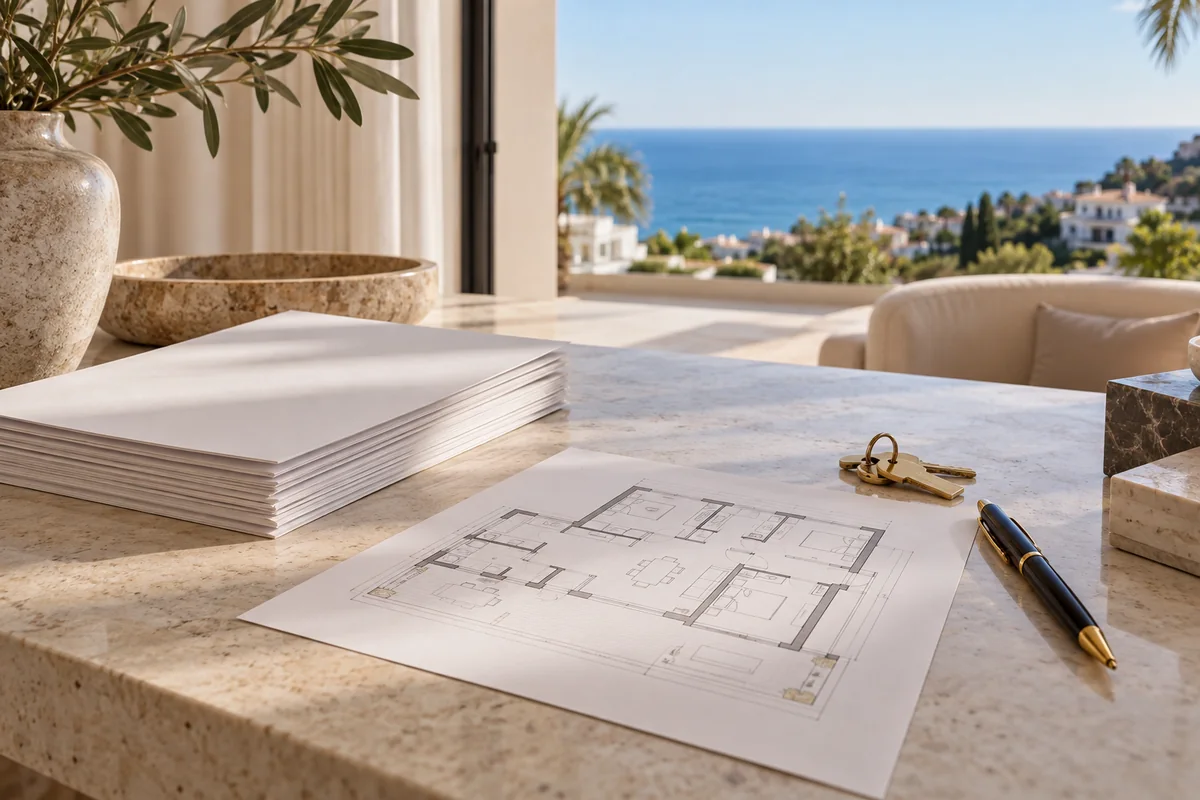
Fix small visible defects, clear surfaces and prepare rooms and outdoor areas before photography. Bright, accurate photographs, a useful floor plan and a precise description help buyers understand the property. Show the terrace orientation, parking, access and actual surroundings, not only the best view.
Agree in advance what is included in the sale, such as furniture, appliances or a parking space. That avoids confusion when an offer arrives.

4. Market and manage viewings
Use a consistent asking price and description across channels. Arrange viewings when the light shows the home well, while making it easy for serious buyers to see it. Protect your privacy by agreeing how access, photographs and personal belongings will be handled.
Ask for feedback after viewings. If interest is low, review the price and presentation against current comparable properties rather than making repeated small changes without a plan.

5. Review the offer and contract
A good offer is more than a number. Check the buyer's financing position, proposed deposit, completion date and conditions. Record what is included and who holds any reservation money. Have your lawyer review the reservation or arras contract before signing; the wording determines the consequences if either side does not complete.
If you have a mortgage, arrange its repayment and Land Registry cancellation as part of completion. The timing and payment instructions should be clear to both parties.
6. Complete, hand over and account for tax
At the notary, the deed is signed, the balance is paid under the agreed terms and keys pass to the buyer. Take meter readings and agree who handles utility and community notifications. Keep copies of the deed and sale costs for your tax records.
Ask a tax adviser to calculate any capital gain and the municipal plusvalía for the property's municipality. If you are a non-resident seller, the buyer generally withholds 3% of the sale price and pays it to the Spanish tax authority as a payment on account of your tax; it is not an additional 3% sales tax. The final liability or refund depends on your return and circumstances.
Official references
Rates and requirements checked in September 2026. Your lawyer should confirm what applies to your sale.